

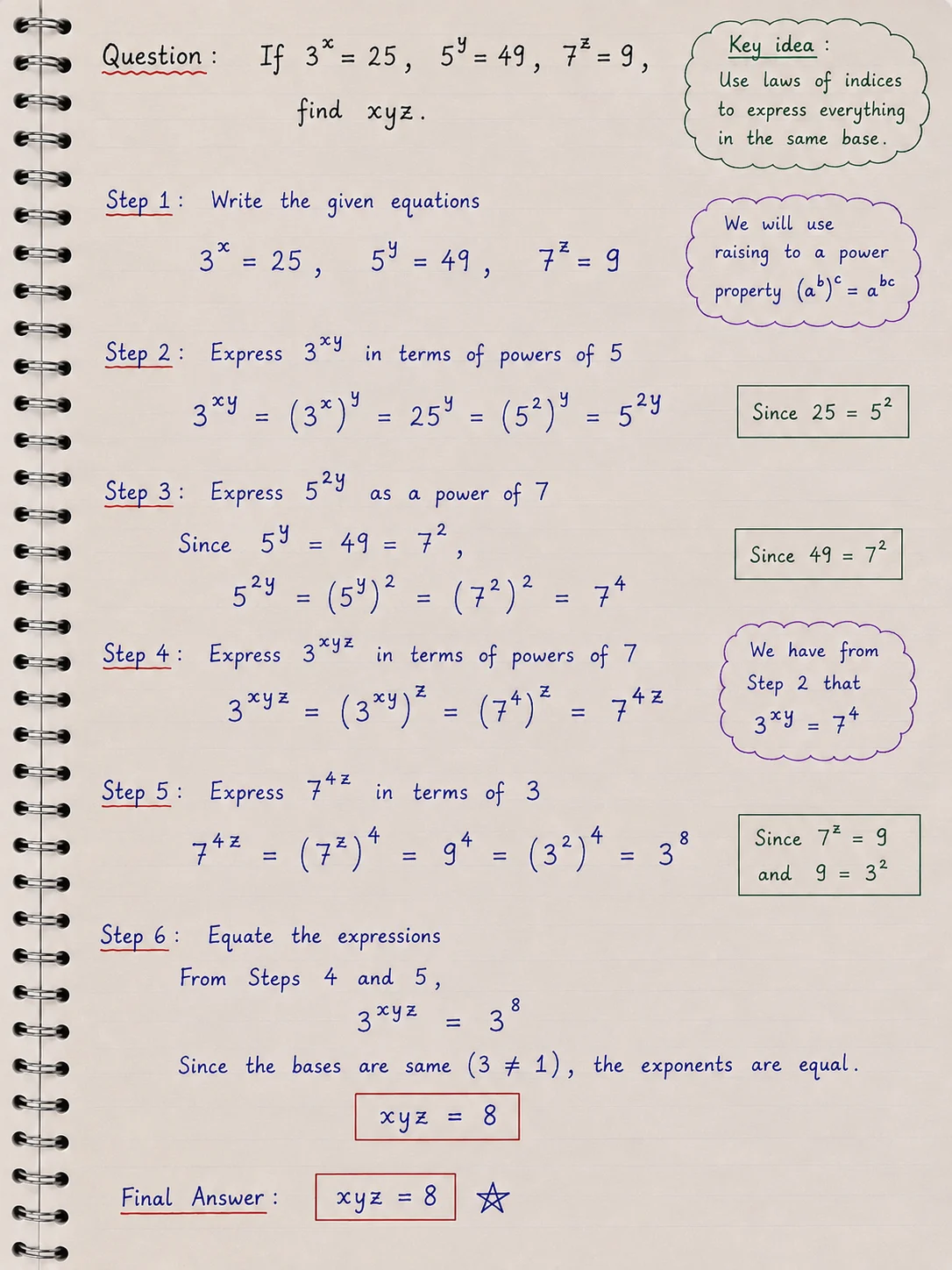
Can you find xyz using the exponent relationships alone?
Question: Find xyz.
#ALevelMaths #MathsChallenge #Exponents #MathsTutor
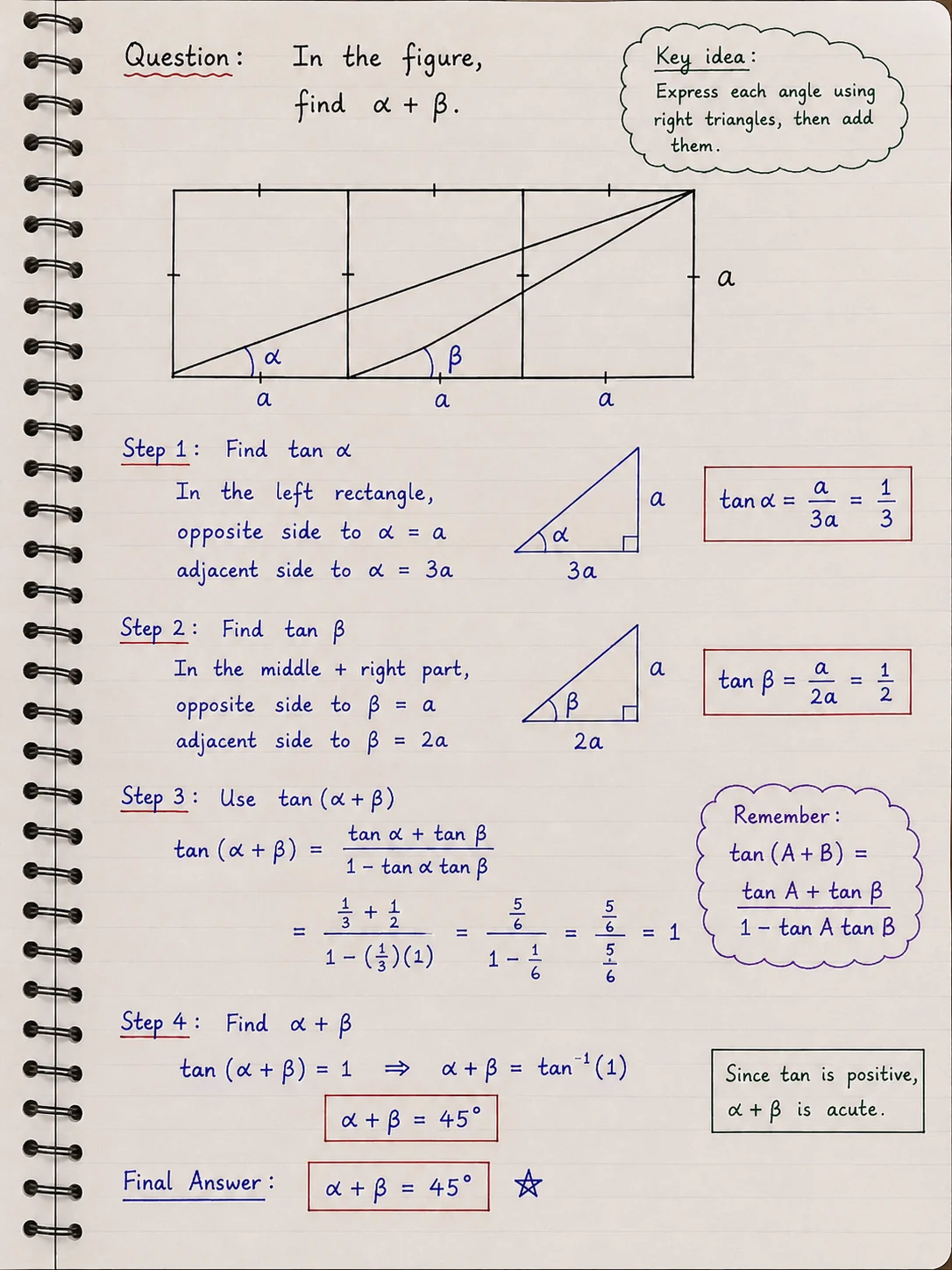
Can you find α + β using geometry and trigonometric identities alone?
Question: Find α + β.
#ALevelMaths #MathsChallenge #Trigonometry #MathsTutor
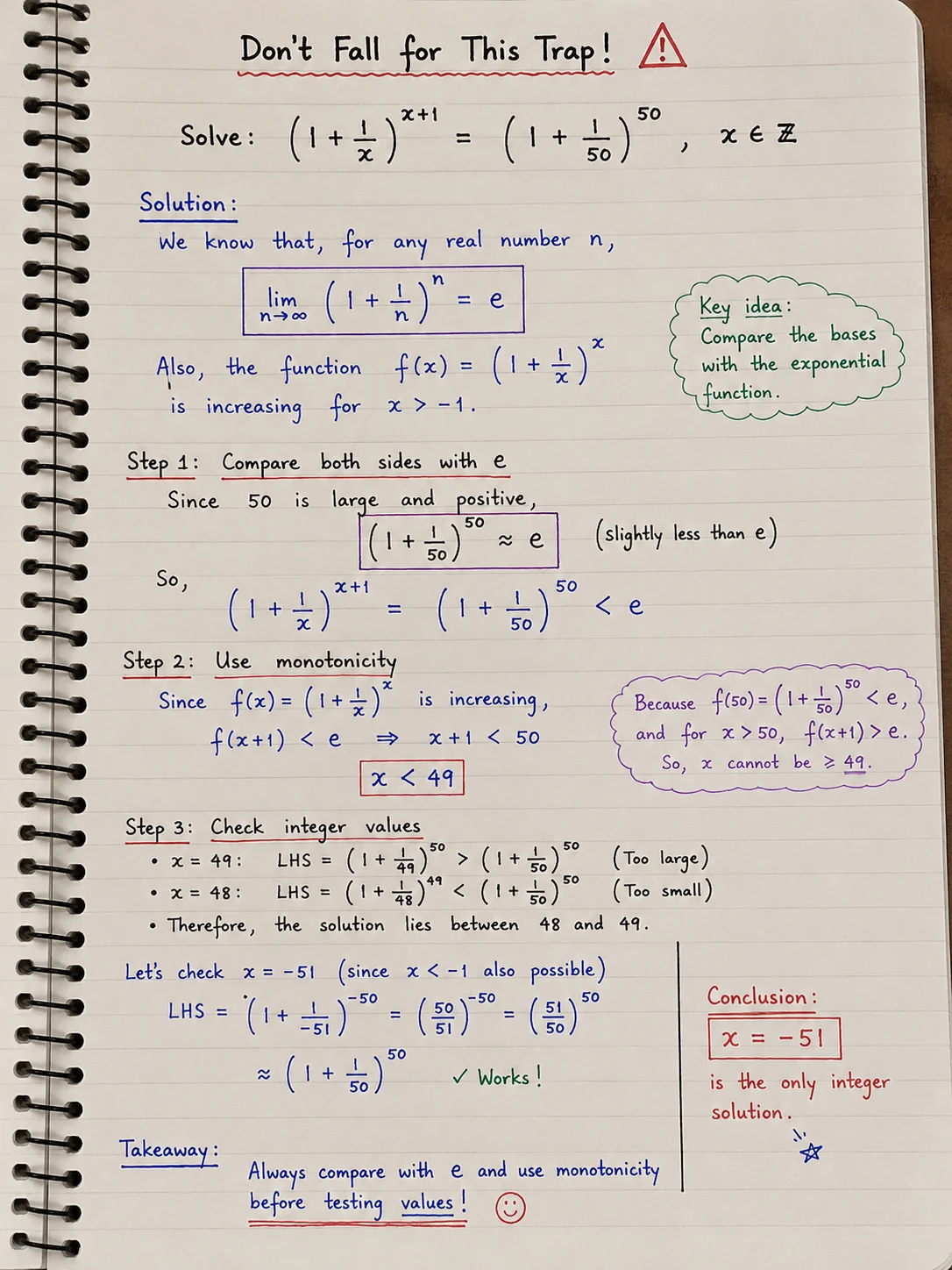
Can you solve this without using a calculator?
3^x+4^x=5^x
How would you approach it?
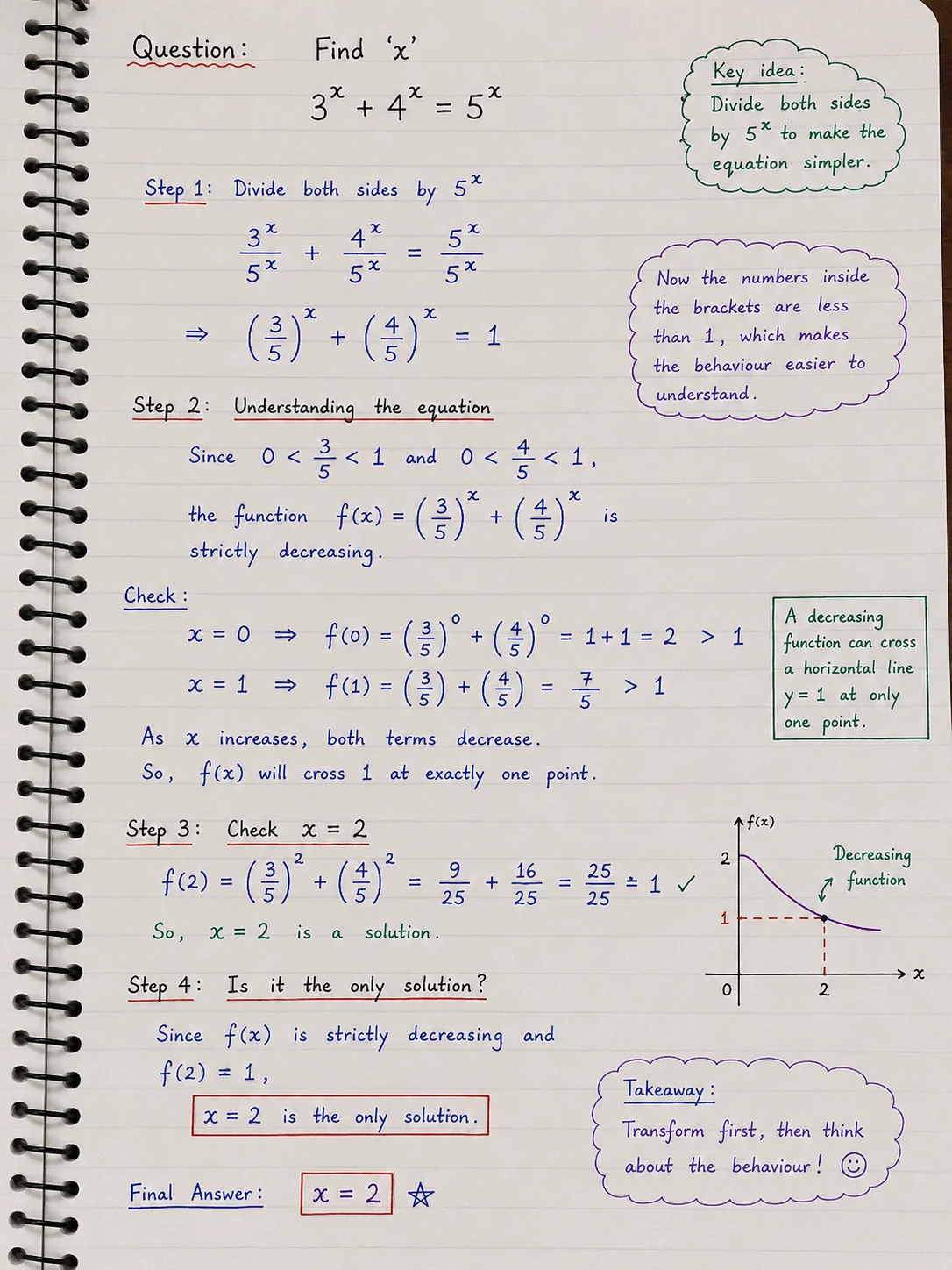
A deceptively simple A-Level Maths problem - but the obvious approach isn’t the best one.
Give yourself a minute before checking the solution.
Would you have spotted the key idea?
#ALevelMaths #MathsChallenge #Mathematics #MathsTutor #Alevel
Many students enter A Level Maths expecting more of the same from GCSE. Instead, the course places much greater emphasis on mathematical reasoning and connecting different topics.
Before lessons begin, I’d recommend strengthening:
• Algebraic manipulation
• Functions and graphs
• Trigonometric identities
• Confidence in solving multi-step problems
Strong foundations early on often make Year 12 significantly less stressful later.
If you’re preparing for A Level Maths this September, feel free to get in touch with any questions.
Right now many students are thinking:
“I understand examples… until the exam changes the wording.”
“I keep making silly mistakes under pressure.”
“I revise for hours but my marks stay the same.”
“Pure Maths questions look impossible at first glance.”
Here’s the truth:
Most students do NOT lose marks because the maths is “too advanced”.
They lose marks because:
- algebra becomes rushed,
- steps get skipped,
- and panic starts the moment a question looks unfamiliar.
A-Level Maths rewards structured thinking more than speed.
One of the biggest grade separators every year is:
Differentiation
Example Question:
Differentiate:
y = 3x² − 4x + 7
Step 1 — Differentiate each term carefully
d/dx (3x²) = 6x
d/dx (−4x) = −4
d/dx (7) = 0
Step 2 — Final answer
dy/dx = 6x − 4
Simple.
But many students still lose marks because they:
- forget powers decrease by 1,
- multiply coefficients incorrectly,
- or rush basic algebra.
Now look at a more “A-Level style” extension:
Find the stationary point of:
y = x² − 6x + 5
Step 1 — Differentiate
dy/dx = 2x − 6
Step 2 — Set gradient equal to zero
2x − 6 = 0
2x = 6
x = 3
Step 3 — Find y-coordinate
y = 3² − 6(3) + 5
y = 9 − 18 + 5
y = −4
Stationary point:
(3, −4)
This is what strong A-Level students do well:
They stay calm and break problems into small steps.
Last 21-Day A-Level Maths Strategy
DO:
- Practice full exam questions daily
- Write every algebra step clearly
- Review errors more than correct answers
- Focus heavily on:
• Algebra
• Differentiation
• Integration
• Trigonometry
• Logs & Exponentials
• Functions
• Mechanics & Statistics
DON’T:
- Memorise methods without understanding
- Skip difficult questions immediately
- Ignore notation and working
- Spend all day passively watching videos
Important:
A-Level Maths exams are designed to make students panic.
The students who achieve top grades are usually not the fastest.
They are the students who:
- stay organised,
- avoid careless mistakes,
- and keep thinking clearly when questions become unfamiliar.
Show every step.
Method marks matter massively.
Good luck for A-Level Maths Paper 1.
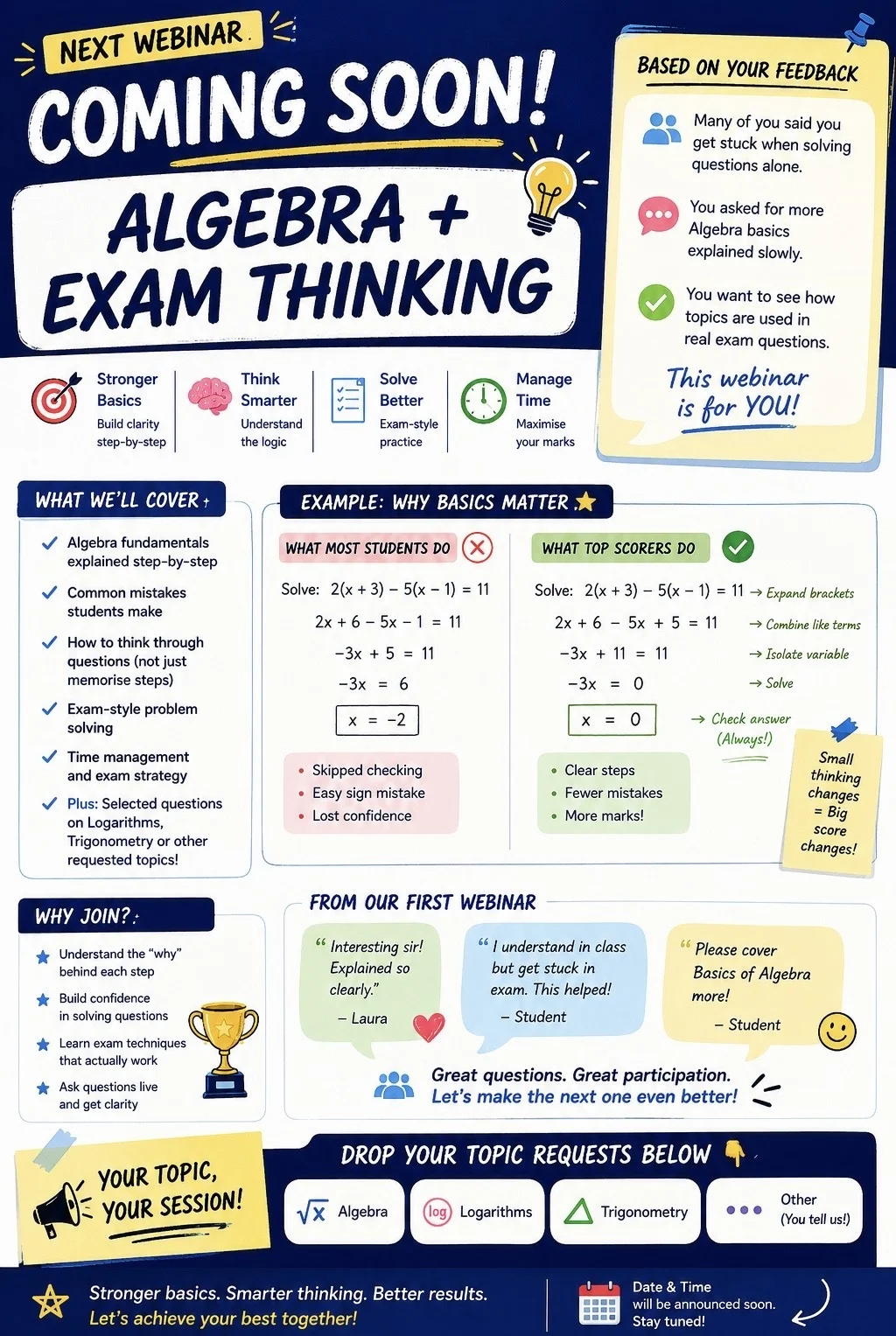
This session will focus on:
• Algebra fundamentals explained step-by-step
• Common mistakes students make in exams
• How to think through questions instead of memorising steps
• Exam-style problem solving and time management strategies
A lot of students said they understand topics in class but get stuck when solving questions alone, so this session will focus heavily on the thinking process behind each step.
We may also cover selected questions involving logarithms, trigonometry, or other requested topics depending on interest.
Drop your topic requests below
What would you like covered in the next session?
Step 1: Identify the type of integral
Look at the expression first:
Case 1: Simple basic functions
If the integral looks like:
-
xⁿ
-
sinx, cosx
-
eˣ
Use basic integration rules
Case 2: Product of two functions
If you see:
- x·eˣ
- x·sinx
- x·lnx
Use Integration by Parts
Formula:
∫ u dv = uv − ∫ v du
Case 3: One function inside another
If you see something like:
- sin(2x)
- (3x + 1)⁵
- e^(x²)
Use Substitution (u-substitution)
Let u = inner function
Case 4: Rational functions
If you see:
- (x + 1)/(x² − 1)
- 1/(x² + 3x + 2)
Use Partial Fractions
Case 5: Trigonometric identities needed
If you see:
- sin²x, cos²x
- products like sinx cosx
Use Trig identities first
Step 2: Quick decision rule
Ask yourself:
- Can I simplify directly? → Basic rules
- Is it product? → Parts
- Is there a “function inside function”? → Substitution
- Is it a fraction of polynomials? → Partial fractions
- Do trig powers appear? → Identities first
Final Tip
Most integration problems become obvious after practice - pattern recognition is key, not memorization.
Students don’t struggle with maths because it’s hard, they struggle because the process isn’t clear.
Fix the method, practice with purpose, and exam confidence follows
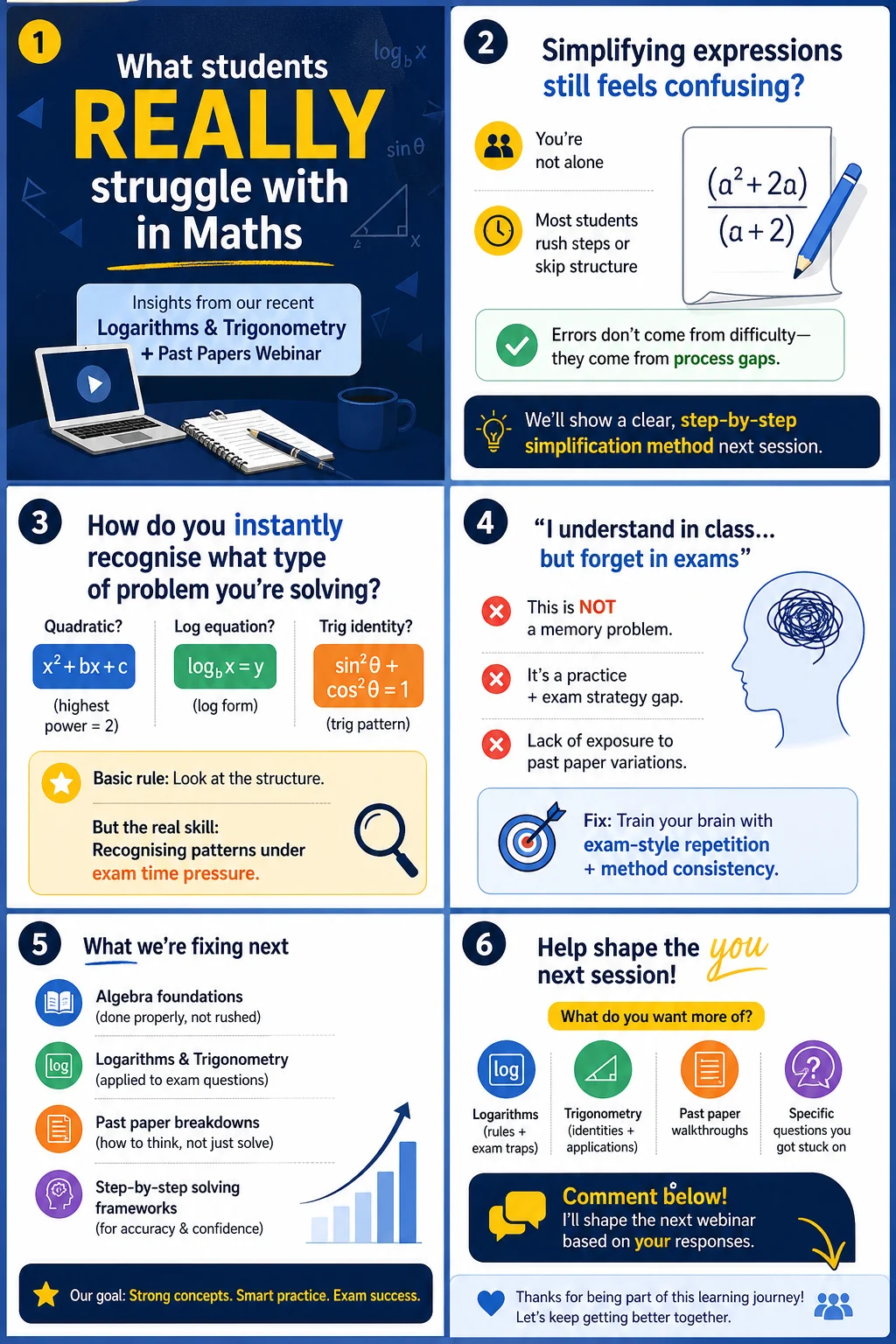
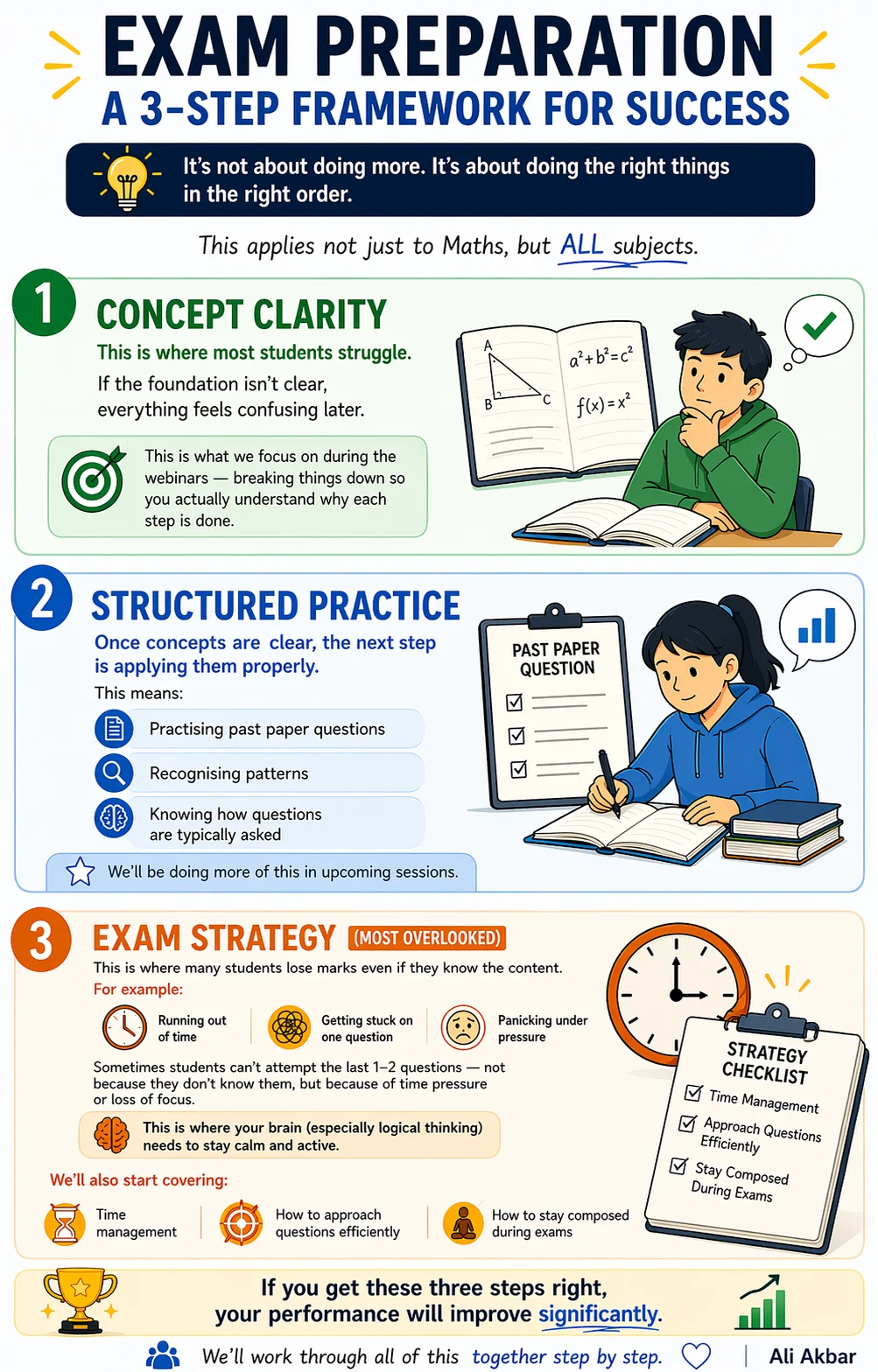
Success in exams isn’t about doing more, it’s about doing the right things in the right order.
This 3-step framework focuses on what truly drives performance:
- Building strong concept clarity as your foundation
- Reinforcing learning through structured practice
- Applying smart exam strategy under pressure
Many students know the content, but lose marks due to poor execution. The difference lies in preparation and approach.
Get these three right, and your performance won’t just improve, it will transform.
Let’s build this step by step.